Navega per la categoria

Intercultural

Càlcul

CASA BADIÀ – 17 d’abril de 2019

Teniu a la butxaca un bitllet de 5,00€ i tres o quatre monedes d’euro. No podeu bescanviar en cap moment

Determineu el cost de la compra i del que us ha quedat

Envieu comentaris a [email protected]

Cal tenir clar que hi ha hagut compra i que han sobrat diners

We are the voice of UN Women in SPAIN

Helen Mukoro Idisi – UN Women, Spain – April 12, 2018

Through advocacy, campaigning and fundraising we aid UN Women in its venture for gender equality and the empowerment of girls inside Spain and round the world.

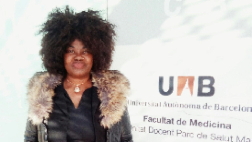
Helen Mukoro Idisi In The Autonomous University of Barcelona For UN Women Presentation

The Autonomous University of Barcelona master’s degree in international health and cooperation program gave H.E Helen Mukoro Idisi, president of UN Women Spain the chance to review and assess the implementation of the UN Declaration on the rights of Women and girls.

Mukoro who was invited by the university on April 9, 2018, to take an interest and present the UN Women and the international reality of women’s rights in the sessions on gender and sexual and reproductive health course that is part of the studies of a master’s program of the department of pediatrics, obstetrics, gynecology, preventive medicine and public health of the medical faculty of the University, showing, talked at 6:00 pm on Monday, on how ladies’ rights far and wide is a vital marker to comprehend global well-being.

Mr Pau Aragonés a professor of tropical medicine and regulatory Head at the faculty held talks about the program with Mukoro in his office before the sessions, he said ”the Master began in the 1985-86 academic year and has been taught ever since, we have trained more than 1,300 health professionals to intervene and improve the health of the communities, work effectively and be coherent with the multidimensional reality of the health, with the rights approach, with the complex relationships between health and poverty, and that responds to the challenges posed by globalization, with its contrasts and inequalities”.

”The course has a development of four quarters: the first two with distance training, the third face-to-face and the quarter of curricular practices tutored in cooperation projects”. He added.

UN Women NC, Spain leader told the students of the Faculty of Medicine that ”a noteworthy global women’s rights treaty was ratified by the majority of the world’s nations a few decades ago. However, in spite of numerous achievements in engaging ladies, various issues still exist in every aspect of life extending from the social, political to the financial. She said ”ladies work as men in Spain, yet are paid less”

”Spanish legislators utilize ladies’ sexual and reproductive health as a device to win elections” ”Ladies’ access to loans in many nations are under 35%”; and that ”sex segregation influences ladies all through their lifetime; and frequently are the ones that endure the most destitution”.

Mukoro – claims to demonstrate the manners by which the infringement of ladies rights brings about a wide cluster of human rights violations that significantly affect ladies and to consider universal legitimate responsibility components for review. She said ”The United Nations and leaders of most nations are not doing what’s needed to address these issues”.

For instance, Nigeria has no policy on gender equality. She likewise tended to the trafficking of women and girls. She said ”the Nigerian government might will to dispense with the trafficking however are reluctant with regards to resolving it on the grounds that as indicated by the World Bank, every year, the Nigerians in the diaspora wire many trillions of dollars to Nigeria, making them a vital gold mine to their families and a cash making machine to the Nigeria government.

President Mukoro told the students that ”If a nation enters a reservation on the very premise of the Universal Declaration on Human Rights – which ensures the general standard of uniformity – then it truly turns into a matter of concern,” she says the treaty on the Elimination of Discrimination against Women (CEDAW) ought not be limited in any nation.

”So when you enter a reservation on Article 2, you are damaging and invalidating the entire idea and sense of the CEDAW and the Universal Declaration on Human Rights”

Mukoro additionally talked on how a portion of the nations that have confirmed the Treaty have questioned Article 2 which forces them to go into a legally binding commitment with the United Nations to take every single essential measure to guarantee equality of women. Similarly, solid protests, have likewise been raised against Article 16, which concerns equality in family life.

”Widows are not allowed to inherit in Nigeria”. She said.

 Of the 161 nations endorsing the Convention on the Elimination of All Forms of Discrimination against Women, around 44 have said they won’t execute certain arrangements of the bargain on political, constitutional, social or religious grounds.

Spanish government authorization Ref: 614400

CIF: G542543132

ONU MUJERES – COMITE NACIONAL, ESPAÑA

AVISO: Las páginas tiene un enlace en Español

CONTACT >

T: 34 696173617 / F: 34 680826894 / E: [email protected]

© 2017 National Committee For United Nations Women, Spain

FACEBOOK

TWITTER

INSTAGRAM

 

Helen Mukoro Idisi makes history as the first Monarch of African diaspora

By Jill Bates – February 18, 2018

A Nigerian born Spanish woman has made another history by becoming the first African in the diaspora to form and float the Royal Kingdom and Aristocracy of Africans in the Diaspora

Helen Mukoro Idisi, born in Warri, Delta State, Nigeria, made history when she declared the African diaspora as the independent Sixth Region of Africa in 2018 and created it as a Kingdom. She also made history in 2016 when her political party, Union de Todos, stood her to run as a presidential candidate in the Spanish General Elections.

She said: “The Kingdom denotes an imperative history for me, as the first African in the diaspora to form a diaspora government that will offer identity to the lost foot, the basic actuality is, verifiably, the African diaspora family lines have lost their rights to aristocratic titles. The definition of the African diaspora is just a hypothesis, our genetic aristocracy is that hypothesis set in motion”.

“As many people know, the Kingdom is likewise a critical point of reference to Africans in the diaspora, the most vital reason of making this Kingdom is spoken to in the way that the global legitimacy whereupon this government has grounded her superstructure rises up out of the 169 million Africans in the diaspora societal, religious and historical heritage of the ancient traditional African history and eminence.

“I trust that today, Africans in the diaspora can see that paying little mind to their background, legacy or confidence, there is a Kingdom that will be a customary place to welcome them – and regardless of where they are from, they can accomplish their dreams and desire in the diaspora”.

“I am excited to be the Monarch and the Commander-in-Chief of the Kingdom, Her Majesty Queen Helen the First, which is striving to energize the African customary and social diversity in the diaspora. I’m eager to realize that I will have the capacity to meet heads of various government on the open doors and difficulties this new role will bring.”

The Crown Prince, HRH Richard of African diaspora said: “The Kingdom gives a conventional African identity to the lost foot that was subjugated and to safeguard the privileges of Africans who emigrated willfully from the continent various who are abused abroad and their particular nations and the African Union have stayed quieted over the mauling of Africans in the diaspora”

Catalonia’s Referendum: Puigdemont Proclaims Victory

By Helen Mukoro Idisi – October 2, 2017

President Mariano Rajoy did not falter in his affirmation that the referendum – which was suspended by the Spanish constitutional court – is illicit. Rajoy not having turned into a fundamental piece of the Spanish democratic system dribbles with unfaithfulness and goes ahead outside effective governance. Rajoy’s laws on Catalonia Referendum, go unnoticed on the grounds that nobody recognizes them as real since his degenerate executives and political party wraps just the rich, combined with one-sided courts, and feeble human rights are a characteristic result of such conditions.

In clamorous scenes that spun the world over on a damaged polls day, Sunday, cops in revolt equip in Catalonia were seen beating and shooting elastic projectiles into voters as they lined at polling stations. Catalan medical authorities said 900 individuals had been injured in the conflicts, including 33 police. 2.26 million Catalonians partook in the polls.

The abstention rate was 58%. Catalonia’s administration, Jordi Turull said. That speaks to a turnout of 42.3 percent of Catalonia’s 5.34 million voters. The preliminary outcomes of the illegal referendum give authority for the Catalan’s leader, Carles Puigdemont, to proclaim autonomy in 48 hours. Prior to the outcomes were reported, Puigdemont said he would keep his vow to announce freedom singularly inside 48 hours if the “Yes” side won the polls.

Rajoy has undermined the handiness of the Catalonia conventional institutional frameworks and her significance to the Spanish economy (33% GDP), debilitating endeavors by the Catalonia’s legislature to build strong overseeing bodies by forcing a high tax exclusively on the locale and a dowager’s wage compensation consequently. The net outcome is Catalonia taken off with low levels of relational trust in Spain and requested for autonomy. Rajoy could be depicted as a bad leader to Spain, he has failed to create wealth or expanding national notoriety, but rather a political fracture in the country, and it straightforwardly encroaches on Rajoy’s capacity to cultivate the positive institutional condition important to support Spanish wealthiest locale in profitable financial, political, and social conduct.

Prior to the outcomes were reported, Puigdemont said he would keep his vow to announce freedom singularly within 48 hours of the vote if the “Yes” side won the polls.

Rajoy’s tenure is an unsuccessful Presidency for not consolidating the utilization of regional characters, regional capacities, and regional institutions to advance Spain. Rajoy’s dysfunctional governance undermine these indigenous resources. As a result, Rajoy’s useless and uncouth leadership can’t use the Catalonian’ histories and traditions to develop powerful formal organizations and relationship with wide authenticity; nor can Rajoy draw on the social capital implanted in cohesive group to encourage economic, political, and social intercourse; and nor is Rajoy ready to utilize the customary representing abilities to run the issues of Catalonia.

More than 750,000 votes couldn’t be tallied on the grounds that polling stations were shut and urns were appropriated, as Officers from the national police and paramilitary Civil Guard – a military power accused of police obligations, seized voting cards and boxes at polling stations to stop them from voting. A Catalan representative said.

Puigdemont, said in a broadcast declaration, that the people of Catalonia had “won the privilege to an autonomous state’ ‘With this day of expectation and endurance, the residents of Catalonia have won the privilege to a free state in the frame a republic.”

Spain’s justice minister, Rafaela Catalá, cautioned that any affirmation of freedom could prompt article 155 of the nation’s constitution being summoned which enables the national government to intercede in the running of an independent locale.

A terrible governance that debilitates a fragile Spain can be traced to President Mariano Rajoy’s unpresidential coercive actions, his government from the Spanish society, and his political party and elites from poor residents. And that have mixed to leap Catalonia’s determined search to detach from Spain.


Helen Mukoro Idisi is a Spanish politician, author, journalist, scriptwriter, administrator, legal adviser, proprietor of HMI Documentary Media and presidential candidate, 2016 Spanish general elections.

Catalonia’s Referendum: Rajoy’s Maladroit Legacy

By Helen Mukoro Idisi – October 1, 2017

Catalonia’s Referendum unquestionably is President Mariano Rajoy’s memorable terrible heritage, of all the presidential way to fizzle, he is moving through the advance of each State. The rational soundness, of the high tax, forced solely on Catalonia is questionable.

The clodhopping and lacking of clarity of Rajoy’s policies and his political party has driven a bash of state-perpetrated wounds. The outcome, strangely, is this most pugnaciously troublesome situation of the nation, bringing together a thriving coalition of an assorted, offended resistance in Catalonia and different States in Spain.

Rajoy has taken the Spanish unpresidential control to new lows. Without a doubt, Rajoy communicates how a deceitful degenerate political party glories in all that it can whirl unscathed. He is plainly a political toxin to Spain, in the event that Rajoy didn’t have a clue, requesting a political Goliath from President Donald Trump, a remote power against a little area in Spain, this demonstrates the “Spanish Robinson Crusoe leader” the father of cluelessness.

Rajoy aimlessly overlooks why the greater part of the Catalonia people who are jobless won’t offer him a reprieve. When voters raised Rajoy to a two-term administration, they longed for positive, great changes in his second term of presidency.

His default has dependably been the exploited slack, perpetually whimpering are reasonable and responsible for the State of Catalonia seeking for independence. Rajoy has turned into a political Cassanova variant of a president, who is lethargic and confused.

Why this unfit blunderer actuates such a great amount of antagonistic vibe by forcing a high tax solely on the State and the people of Catalonia, at an early stage and still on, Rajoy positively, credit to the unwavering, unintimidated President Carles Puigdemont for negating his awkward, constant political aggression on the wealthiest locale of Spain.

Catalonia produces a reasonable 33% of Spanish GDP but gets a scanty compensation in return.

Rajoy’s corrupt executives parade how unjustifiable and coldblooded is Partido Popular who request the bring down of taxes and amnesty for scores of extremely rich people while the not well nourished, poorly housed kids without restorative access endure in Catalonia and Spain.

The future advantages of Rajoy’s cluelessness and this differing nation remain in place, urged by a stirred people, learn never again to cultivate an unmindful, careless man whose inept abilities repudiate all thoughts of enormity in Spanish administration.


Helen Mukoro Idisi is a Spanish politician, author, journalist, scriptwriter, administrator, legal adviser, proprietor of HMI Documentary Media and presidential candidate, 2016 Spanish general elections.

Catalonia’s Battle For Independence: The Blunt End

By Helen Mukoro Idisi – September 29, 2017

The legislative head of Catalonia, Carles Puigdemont has resuscitated to make a free nation involving all regions of Catalonia State. He plans to set up an independent country for the Spain’s wealthiest area. In spite of different endeavors by the Spanish government to stop an emblematic referendum on autonomy from being held in Catalonia on Sunday, ace separatists look set to hold a vote in any case.

With a populace of 7.5 million, its capital is the beautiful city of Barcelona, the State is one of Spain’s wealthiest and most beneficial regions and has a particular history going back right around 1,000 years. One of the principal things that strike you when you enter the city of Barcelona via Train is its delightful Train station. After entering, a stunning domain can be detected in all the comfortable subtle elements in Plaza Catalonia: the wonderful trees and streetlights, the pretty houses and the great structures like the Sagrada Familia. Aside from this structural legacy of a valuable domain the city contains a considerable measure of ambitious youngsters and awesome advancements
Albeit most surveys demonstrate that the chicken’s share of Catalans supports remaining a piece of Spain, and there is outrage at the Spanish government for not permitting the lion’s share an official vote on the issue and for the apparent concealment of a vote based process. A gigantic measure of publicity is being made by the administration of Catalonia to sanction its cases.
The political contention utilized by the Catalan patriots to legitimize a theoretical severance of Catalonia is fixated on a tax deprivation by Spain. When following the autonomic guide, the normal and low wages of Catalonia are the ones that pay the most taxes of Spain and those of Madrid, which less. A salary of 20,000 euros pays 207 euros more in the event that he lives in Barcelona than if he lives in Madrid.
Catalonia is the Autonomous Community with the most astounding GDP in Spain (19% of the national), the fourth in GDP per capita and the most obligated in supreme terms, up to 33% of the yearly abundance of Spain is created in the district. Catalonia pitches 44.000 million euros of her GDP to Spain, and 37,000 million euros its fares to the European Union and the 22,000 million euros it fares to whatever remains of the world.
In the event that Catalonia was autonomous, it could have an extra 16,000 million euros every year (around 8% of its GDP, albeit some of the time this figure ascends to 9 or 10%). The Generalitat says.
Various reports in such manner likewise censure the application by Puigdemont’s of exceptionally liberal criteria of Catalonia’s pay towards Spain and, then again, extremely prohibitive consumption of Spain towards Catalonia. The Civic Associations of Catalan esteems this inclination in 792 million euros added as a shortfall to the Catalan financial adjust in the counts of Catalonia due to these bookkeeping traps.
The present constitution was drafted correctly to switch the mistreatment of Spain’s phonetic and social minorities and put a conclusion to provincial hostility. The people of Catalonia does not enjoy a base wage but rather those in the Basque State do (the Basque State is the only district in Spain that benefits such advantages).
Article 14 of the Spanish Constitution expresses that “Spaniards are equal under the watchful eye of the law, and no segregation in view of birth, race, sex, religion, sentiment or some other individual or social condition or situation may win.”
Specialists reports dissecting the diverse hostile to neediness measures against other States by the Spanish government, concur that the base pay in compel in the Basque Country can be considered as a social security apparatus tantamount to the most developed nations, and the government of Catalonia demanded answers from the Spanish government on why the Basque State benefit from a minimum wage and other States do not enjoy such benefits.
The principles identifying with central rights and opportunities perceived by the Constitution should be translated as per the Universal Declaration of Human Rights and worldwide arrangements and concessions to similar issues endorsed by Spain.
If there is one question that comes to the minds of the Europeans when they read or hear news from Spain these days it is: “what to think about the situation in this country?”
The European Union have refused to step in to resolve the regional conflict in Spain, the President of the Union says that it is an internal matter and the EU will respect the Spanish Constitution. The national government in Madrid has sent police to prevent a freedom of vote on October 1, with requests to assume control over any surveying corners that are set up.
Articles 1 and 2 of the Spanish Constitution enshrine the principles of national sovereignty, which resides in the Spanish people as a whole, and of national unity, in accordance with the principal precepts of advanced democracies.
It isn’t yet evident if Catalonia would be permitted to rejoin the European Union if the well-off area turns into a free state. Mr, Puigdemont has said that a ‘no’ vote to Catalonia’s independence would incite a governorship election.


Puigdemont could proclaim freedom singularly if a ‘yes’ vote wins in October, the local government will pronounce autonomy inside 48 hours, which would prompt an unforgiving intercession by the legislature of Mariano Rajoy. The exercise of an alleged right of self-determination by a part of the Spanish territory is not allowed in the Spanish Constitution. Under Article 155 of the Constitution, Madrid can specifically mediate in the running of Catalonia and power it to drop the vote. The Constitutional court has decided that the referendum is ilegal.
With respect to political parties and leaders, the effect of an autonomous Catalonia resembles a hard shake uneasy to break. The referendum chaos demonstrated the defiled, insatiable and undemocratic nature of Spanish legislative issues, which doesn’t make it exceptionally appealing for youngsters to get engaged with it. Despite the fact that their position had transformed from a-political before Catalonia to extremely political after Catalonia, none of the Spanish individuals were thinking about joining a common battle against Catalonia.
The people of Spain feel negotiation is particularly important now when suppositions are floating further away than any time in recent memory, the news continues assaulting them with conflicted stories that change the setting of the civil argument and on the grounds that they were stunned by a portion of the contentions of individuals, leaders, and media in Spain and abroad.
When you ask the Spanish people, what do they figure Spain ought to do on the off chance that Catalonia pronounces the autonomy, every one of them concurred that Spain would need to battle for it. Particularly as long as the impact of Pro-autonomy in that piece of the nation remains so solid and there is no possibility for a fair civil argument about the position of the locale, but the people of Catalonia guarantees that they won’t acknowledge abuse and minimization from Spain and counter it with a lawful challenge if important. What you see at that point is that the people of Catalonia are for the most part battling for a bright future in which they can completely build up their aspirations. They’re battling for a free, Catalonia.


Helen Mukoro Idisi is a Spanish politician, author, journalist, scriptwriter, administrator, legal adviser, proprietor of HMI Documentary Media and presidential candidate, 2016 Spanish general elections.

Antípodes

Josep Juanbaró, [email protected] – SDRCA – Les Corts – 6 de maig de 2017

Suposem dos nens petits que, tenint la mateixa edat, han arribat per dos camins diferents al nostre país. Considerem que tots dos pertanyen a la mateixa nació africana

Un va ser adoptat, es diu Jofre Esteràs Montesinos. L’altre va arribar amb els seus pares en una de les tantes rutes, es diu Nicolas Nguema Micha

Tots dos van a la mateixa escola del barri, tots dos són amics. Qui dels dos podrà accedir amb major facilitat a un ofici o professió ?

Hem fet l’enquesta: qui té més números per accedir al mercat laboral serà en Jofre. Deixem a les vostres mans si hi esteu d’acord o no

La integració dels africans en les nostres societats no és només en mans de l’immigrat sinó del seu entorn

Encara que només sigui per pur egoisme, hem de convidar els nouvinguts als nostres espais. Ells faran la resta

Se senten dir versions apocalíptiques del que passarà en l’esdevenidor si aquests infants no han estat admesos als nostres entorns

Interculturalitat

Josep Juanbaró, [email protected] – SDRCA – Les Corts – 18 d’abril de 2017

Sóc intercultural de naixement així com per vocació a l’aprofitar l’avinentesa, però no l’únic

La meva existència és el creuament d’una casa del Pallars amb una casa de l’Hospitalet de Llobregat

Nascut al cor de Catalunya, vaig començar a assaborir el Cap i Casal de Catalunya per raons d’Universitat

Tinc família a la Catalunya occidental (Pallars, Noguera, Segrià) i de la Catalunya oriental (Bages, Vallès oriental, Barcelonès)

Tinc coneguts a l’Anoia, el Solsonès, el Berguedà, el Bages, Osona, i arreu de Catalunya

Molts de vosaltres em direu que sou interculturals per raó d’origen en altres territoris més allunyats.

Això no obstant, us puc assegurar que, encara que Catalunya és molt petita, hi ha unes diferències culturals molt grans entre comarques que es noten en la pronúncia de la llengua

També hi ha la gran ombra que fa Barcelona, un lloc extraordinari on només he trobat una única persona que manifestés fa anys que era barceloní de tercera generació

Va ser a l’Ajuntament de les Corts on una funcionària de la Casa Gran va exposar que Barcelona seguiria el model intercultural

Tot i reconèixer que Barcelona no havia estat prou al cas de la immigració estrangera, bo era corregir

Poc feia que treballava en una fàbrica del Baix Llobregat quan em van etzibar que jo no seria mai de Barcelona

Jo vaig callar, però van arribar al meu cap mecanismes de defensa com ara que que la Constitució em protegia o que si més no la Declaració dels drets humans m’emparava

Però també em vaig dir que treballava i vivia en llocs on es manifestava la meva interculturalitat. Vet aquí dos models a Europa: la interculturalitat i la multiculturalitat, informeu-vos-en si us plau